
- Home
- Messages
Messages
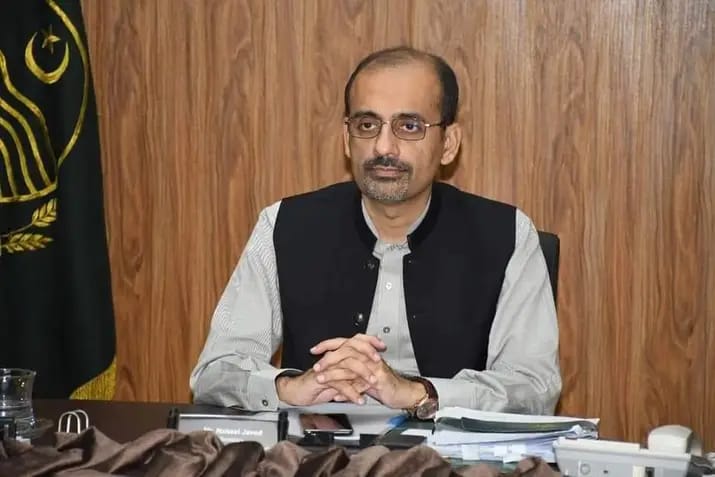
As we look towards the future, we believe in a world of new possibilities with extraordinary opportunities for innovation and reinvention. Individuals and organizations can play a critical role in building a sustainable future by changing the way we work, solving problems and creating value in the existing system. The era of galloping industrialization, changes in climate patterns, rapid population growth and the break-neck pace of urbanization have led to exacerbated damages occurring in the wake of natural disaster events in Pakistan. Disaster Risk Management (DRM) and Disaster Disk Reduction (DRR) has therefore become a significant aspect of government operations for developing countries in particular, across the globe. The existential challenge faced by the mankind due to varied calamities including smog, droughts, desert locusts, Covid-19 and earthquake is unprecedented and demands a paradigm shift from being flood centric to cover the entire range of disasters while devising coping strategies and response plans. Disaster Management is combination of all the coordination and integration activities necessary to build, sustain and improve the capability to prepare for, protect against, respond to and recover from any disaster. For such efforts to be successful it is necessary that a multi-jurisdictional, multi-sectoral, multi-disciplinary and multi-resource methodologies are adopted. Therefore, it is extremely important that the Provincial Government, District Administrations and the private sector complement each other in achieving shared goals of an efficient disaster risk management in Pakistan.
Provincial Disaster Management Authority, Punjab (PDMA) has been operating as an autonomous body and Disaster Management Department under Board of Revenue (BOR); and acts as focal agency for mainstreaming disaster risk reduction into development planning, disaster preparedness and entails whole spectrum of disasters including forecasting, mitigation, relief, recovery, rehabilitation, organized emergency response and early recovery. Here, I would like to mention the PDMA’s signature initiatives regarding Smog mitigation i.e. conversion of 65% brick kilns (5580) into zigzag methodology in less than three months without spending a single penny from Governments funds and imposing penalties against defaulters after declaration of Smog as calamity. In addition, the role of PDMA for Covid-19 mitigation remained instrumental that led to the establishment of control room, trend analysis, emergency cash assistance programme, standardization of PPEs, Trace Track Test (TTT) and philanthropic cell. PDMA is also involved in various projects in collaboration with BOR Punjab for managing multiple activities, including ‘State Land Information Management System’ (SLMS) , ‘Village Emergency Loss of Livelihood Reporting and Facilitation Centers (VERFC’s)’, Automation of Girdawari system’, ’Digitized Laal Kitab’, and ’Roznamcha Waqiati. Looking into the trail of previous disasters and lesson learned, PDMA has proven to be the largest government sector public-spirited organization relentlessly working in peculiar and complex environment, hence constantly facing unique challenges while dealing with wide-ranging catastrophes. Hence, the journey continues where PDMA is ruthlessly striving to bring innovations in its entire arrangement by adding technological interventions and mechanize contemporary solutions in the domain of Disaster Risk Management.

Historical evidence reveals that Punjab has been confronted with recurring geological calamities including devastating floods, destructive earthquakes, famines, droughts, epidemics and critical environment challenges in form for climate change and smog. These natural and human induced disasters have effected economic growth by damaging the agricultural and industrial productivity as well as the residential infrastructure. One of the key lesson learnt was that Punjab lacked in organized institutional structure for a well-informed and timely response. The establishment of Provincial Disaster Management Authority (PDMA) Punjab and later its regionalized settings to the lowest tier of community was the aftermath guided by such notable lessons.
Since then, PDMA has evolved tremendously leading to the establishment of a pro-active disaster management system in the Province. In pursuance of its mission of safeguarding lives and livelihoods, PDMA is acting as the articulating authority between key provincial departments including Rescue 1122, Civil Defense, District Governments and Police for immediate rescue and rehabilitation operations. Now after more than 16 years, it’s gives me immense pleasure to mention that PDMA has successfully executed major milestones in the form of mega projects like Model Villages-2010 (construction of 22 model villages with worth of PKR 1.5 billion for more than 5000 families), Watan Card-2010( cash compensation programme of PKR 27.5 billion for over 360,000 families) , Khadim-e-Ala Relief Card-2012, Awaran Earthquake-2013, IDPs (Internally Displaced People of South Waziristan) Operations – 2014, Khadim-e-Punjab Imadadi Package (KPIP) 2014 (cash compensation of PKR 16 billion for over 350,000 people) Flood-2015, and Prime Minister’s Kissan Package-2015 (cash compensation of PKR 25 billion for over 1.1 million farmer); Locust control, Smog Mitigation, combating Covid-19 by pioneering in standardization and provision of Personal Protection Equipment (PPEs); establishment of Covid-19 monitoring Control Room; CM Insaaf Imdaad program merger with Ehsas Kafalat; establishment of over 500 camp sites for disbursement of emergency cash assistance under Ehsas Kafalat Programme; Provision of food hampers for the families of quarantined zaireen were provided food hampers; Provision of transport/meal to Zaireen coming from Taftan border and Trace-Track-Test (TTT) to trace 350,000 foreign returnees.
A part from extending support in inter provincial and national programmes, a dedicated Project Implementation Unit (PIU-PDMA) was also established to implement projects to mitigate risks of future disasters, enhance crisis response capabilities and improve Government of Punjab’s resilience against disasters. Flood Emergency Reconstruction and Resilience Project (FERRP) was carried out with the assistance of Asian Development Bank (ADB) and Government of Pakistan for risk profiling of 20 most vulnerable districts of Punjab through Multi Hazard Vulnerability and Risk Assessment (MHVRA) for building long term preparedness, risk effective planning and mitigation measures, capacity development and techno-centric disaster risk management. PDMA has also successfully implemented its World Bank assisted Disaster and Climate Resilience Improvement Project (DCRIP) which has strengthened the Government’s capacity for risk identification and DRM institutional structure, as well as equipping the Disaster Management Authorities in Punjab. A part from strategic procurement of hi-tech equipment under DCRIP, PIU-PDMA also facilitated the establishment and coordination of District Emergency Operation Centers (DEOC’s) across all 36 districts of the province for real time reporting and monitoring of emergency situations in the province.
As a signatory to the SFDRR, PDMA Punjab, is adopting ambitious global targets aimed at increasing resilience by addressing risk through a proactive approach. Given that, while planning and preparing any intervention and service regarding Disaster Management, it has been ensured that it is in line with all the global disaster risk reduction frameworks. In its endeavor towards understanding disaster risk PDMA Punjab has undertaken several initiatives like establishment of Hi-Tech Command, Control and Communication Center, Satellite Based Connectivity with DDMAs and Line Departments, Inventory Management System (IMS), Punjab Disaster Management Information System (PDMIS), Integrated Early Warning System (IEWS) and etc. In the end, I congratulate the whole team of PDMA for their performance par excellence, and look forward to continue this incredible journey of resilience and commitment for prioritizing the safety and livelihood of masses through state-of-the-art systems and sustainable interventions.